
Affordable eCommerce Tools to Grow Your Small Business in 2026
The $6.88 Trillion Wake-Up Call
Here’s a number that should get your attention: global eCommerce sales are projected to hit $6.88 trillion in 2026, a 7.2% jump from the year before. That’s not a trend. That’s a tidal wave.
And here’s the thing: most of that wave isn’t being ridden by Fortune 500 giants. It’s being built, brick by digital brick, by small business owners just like you, people who figured out the right tools, kept costs tight, and showed up where their customers were already shopping.
But here’s where most small businesses stumble: they either overspend on enterprise-level software they don’t need, or they cheap out on tools that kneecap their growth. The sweet spot? Affordable eCommerce tools that punch above their weight.
This guide is your shortcut to that sweet spot. We’ve analyzed what’s actually ranking, what’s actually working, and what’s genuinely worth your money in 2026.
Why Affordable eCommerce Tools Matter More Than Ever in 2026
Let’s talk about context. The online retail playing field has shifted dramatically.
- 2.86 billion people will shop online globally in 2026
- 21.1% of all retail sales now happen online
- Mobile commerce drives 60–74% of global eCommerce traffic
- 84% of eCommerce businesses rank AI as their highest priority.
The upside? Tools that once cost thousands per month are now available at a fraction of that price. The market has democratized. A solo founder in Kansas City can now access the same caliber of tech as a brand with a 20-person tech team if they pick the right tools.
The downside? Option paralysis is real. There are hundreds of platforms, plugins, and tools screaming for your attention and your credit card. Knowing what to pick and what to skip is the actual skill.
What to Look for in Affordable eCommerce Tools
Before we dive into specific platforms and tools, let’s establish a framework. The best budget eCommerce solutions share a few non-negotiable qualities:
- Transparent, predictable pricing- No hidden fees, surprise transaction cuts, or add-ons that double your bill.
- Scalability- You want a tool that grows with you, not one you’ll outgrow in six months or be stuck paying enterprise rates to keep using.
- Mobile-first functionality- With 74% of retail site traffic coming from smartphones, your tools need to work beautifully on mobile for both you and your customers.
- Integration-friendly architecture- The best tools play well with others: email marketing, CRMs, payment gateways, analytics, and social commerce.
- Solid SEO foundations- Traffic you don’t pay for is the highest-ROI traffic. Your platform should support clean URLs, fast load times, and proper metadata.
- Security baked in- SSL, PCI compliance, and fraud protection shouldn’t be premium add-ons.
Top Affordable eCommerce Platforms for Small Businesses in 2026
1. StoreEngine: The WordPress Power Play
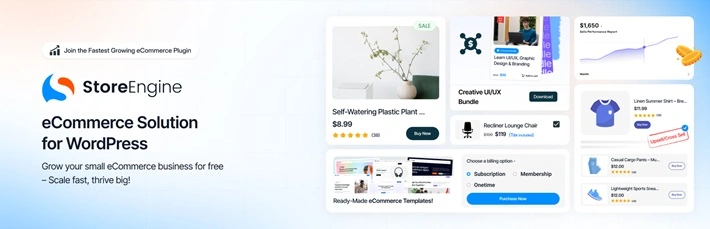
If you’re already on WordPress or you’re ready to make the smartest move in affordable eCommerce, StoreEngine is what you’ve been waiting for.
StoreEngine is a powerful WordPress eCommerce plugin built specifically for small and growing businesses that want full control without full-stack developer costs. It’s not trying to replace Shopify in the SaaS game; it’s doing something smarter: leveraging the world’s most popular CMS (WordPress powers 43%+ of the web) as a launchpad for a serious online store.
Why StoreEngine stands out in 2026:
- Built on WordPress, which means you own your store, your data, and your content. No platform holds you hostage.
- Modular add-ons system, so you pay only for features you actually use
- Seamless integrations with external tools, payment gateways, email platforms, and CRMs
- Comprehensive documentation, tutorials, and a dedicated support community
- Actively updated with new features (check their What’s New page it moves fast)
The key differentiator? StoreEngine is built for builders. It’s for the entrepreneur who wants their store to be a real digital asset, not a rented shop on someone else’s platform. When you grow, you’re not locked into escalating monthly fees based on revenue thresholds. That’s a big deal.
2. WooCommerce: The Free Foundation
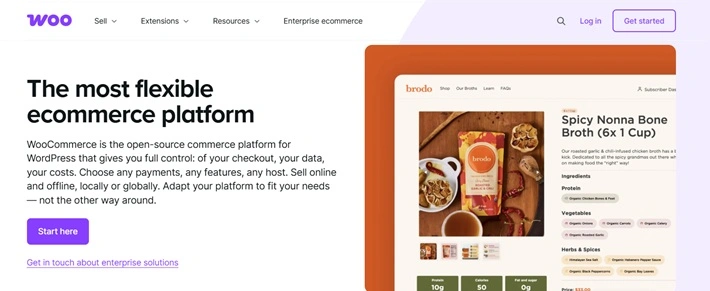
WooCommerce is the open-source eCommerce plugin for WordPress and remains one of the most popular platforms globally. The core plugin is free, making it highly attractive for budget-conscious startups.
Pricing: Free plugin; hosting costs approximately $120/year. Paid extensions vary.
Best for: Businesses comfortable with WordPress, wanting maximum customization.
Heads-up: Advanced features like email automation and certain POS integrations require paid extensions. Costs can creep up. This is exactly the gap that StoreEngine is designed to fill, giving you WooCommerce-style flexibility with a more cohesive, purpose-built experience.
3. Shopify: The Reliable Workhorse
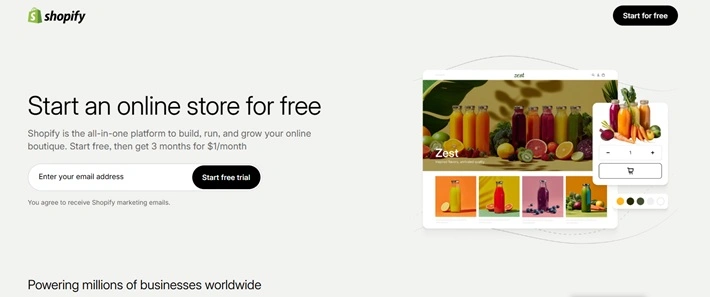
Shopify remains the world’s leading eCommerce platform for good reason. Its ecosystem is massive, with over 16,000 apps, beautiful themes, and a checkout experience built to convert.
Pricing: Plans start at $25/month; the Starter plan is at $5/month for basic selling.
Best for: Businesses wanting an all-in-one, fully hosted solution with minimal setup.
Trade-off: Transaction fees apply unless you use Shopify Payments. At scale, costs add up quickly.
4. Wix eCommerce: The Beginner’s Best Friend
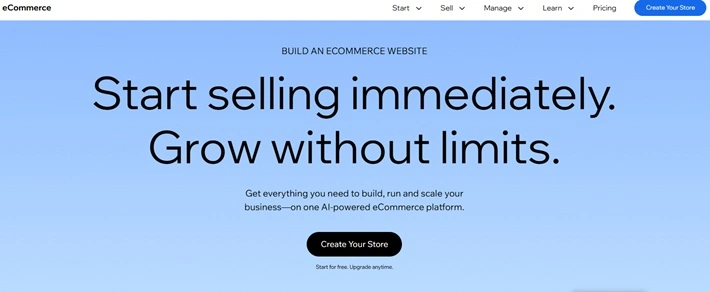
Wix has evolved well beyond its website-builder roots. Its AI-powered store builder makes launching a professional online store genuinely fast, even if you’ve never built a website before.
Pricing: eCommerce plans range from $159/month
Best for: Small businesses with fewer than 50 unique products wanting design-forward stores without technical complexity.
5. ReachShip Multi-Carrier Shipping Plugin
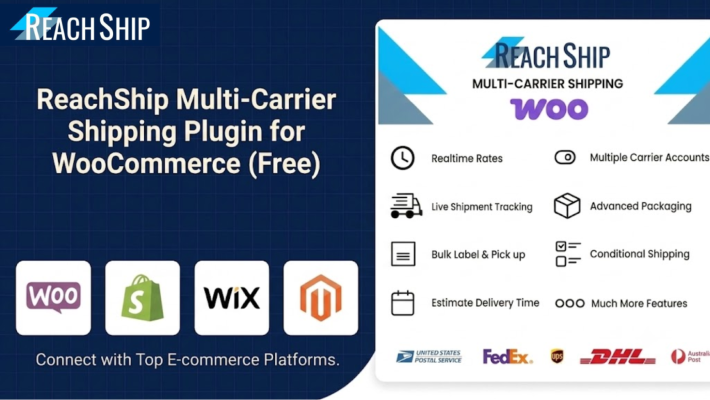
ReachShip Multi-Carrier Shipping Plugin is a free WooCommerce shipping solution that helps merchants streamline order fulfillment by managing multiple carriers from a single dashboard. It integrates with leading carriers to display real-time shipping rates, generate and print shipping labels, schedule pickups, and track shipments—all without leaving WooCommerce.
Designed for both domestic and international shipping, ReachShip reduces manual effort through shipping automation, bulk shipment processing, intelligent parcel packaging, and conditional shipping rules. It also offers address validation and estimated delivery dates, helping merchants improve shipping accuracy, reduce operational costs, and deliver a better post-purchase experience.
Pricing:
ReachShip Multi-Carrier Shipping Plugin is available for FREE.
Best for: WooCommerce store owners looking for a free, scalable multi-carrier shipping solution with real time rates, shipping automation, and centralized shipment management.
6. BigCommerce: The Scalability Machine
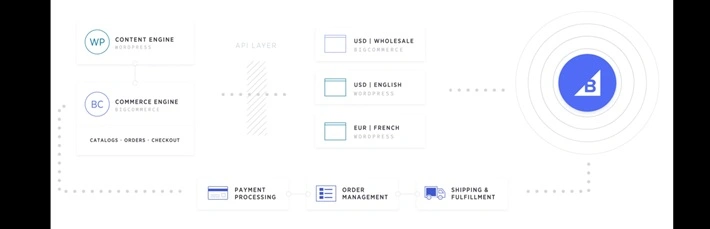
BigCommerce is the go-to platform for small businesses with serious growth ambitions. Its built-in features are extensive multi-channel selling, advanced SEO, and integrations with Amazon, eBay, and social platforms.
Pricing: Tiered plans; no transaction fees.
Best for: Small businesses planning to scale fast and needing enterprise-grade tools without enterprise pricing.
7. Hostinger eCommerce: The Budget Champion
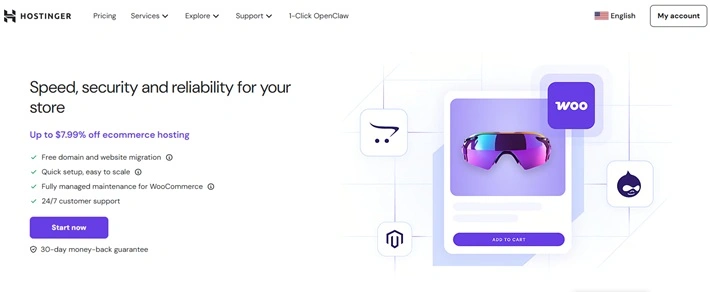
Hostinger has made significant waves by offering a complete online store solution at a fraction of competitor costs. AI-powered product description generators, 0% transaction fees, and PCI-DSS compliant payment integrations make it a strong contender for budget-conscious entrepreneurs.
Pricing: Business plan pricing is significantly below Shopify or BigCommerce.
Best for: First-time store owners who want professional functionality at entry-level prices.
8. Ecwid: The Plug-and-Play Option
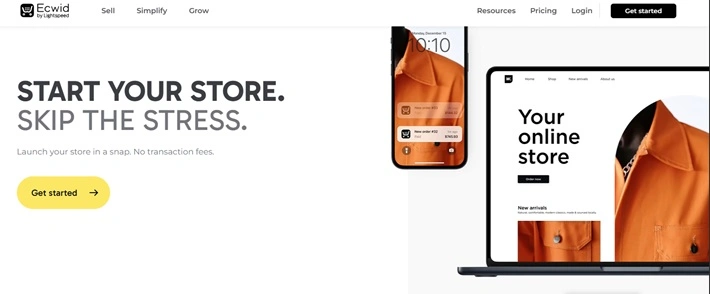
Ecwid is perfect for small businesses and solo vendors who want to add a store to an existing website without having to rebuild from scratch. A free plan supports up to 10 products.
Pricing: Free tier available; paid plans for advanced features.
Best for: Businesses wanting to add eCommerce to an existing site quickly.
eCommerce Platform Comparison Table
| Platform | Starting Price (2026) | Best For | Transaction Fees | Self-Hosted? |
| StoreEngine | $69/year (~$5.75/mo) | WordPress users wanting full control | None (via your gateway) | Yes |
| WooCommerce | Free (+ hosting) | Max customization | 2.9% + $0.30 (standard) | Yes |
| Shopify | $25/mo (Basic) | All-in-one beginners | 0.5% – 2% (if not using Shopify Payments) | No (SaaS) |
| Wix eCommerce | $159/mo (Core Plan) | Design-focused small stores | Standard gateway fees | No (SaaS) |
| ReachShip Multi Carrier Shipping Plugin | Free (Standard) | WooCommerce store owners looking for multi-carrier shipping, real-time rates, shipping automation, and centralized shipment management | No additional transaction fees | Yes |
| BigCommerce | $29–$39/mo (Standard) | Fast-growth businesses | None | No (SaaS) |
| Hostinger | $2.99/mo (Business) | First-time store owners | 0% | No (SaaS) |
| Ecwid | Free / $5/mo (Venture) | Adding a store to the existing site | Standard gateway fees | No (SaaS) |
Beyond Platforms: Essential Affordable eCommerce Tools by Category
A platform is the foundation, but growing a store takes a smart tech stack. Here’s what you need, category by category:
Email Marketing & Automation
Why it matters: Email ROI consistently outperforms every other channel. Automated abandoned cart recovery alone can reclaim a significant portion of the $5.2 trillion in abandoned carts globally each year.
Budget options: Mailchimp (free tier), Klaviyo (usage-based), Brevo (formerly Sendinblue)
Analytics & Data
Why it matters: You can’t optimize what you can’t measure. Track traffic sources, conversion rates, and customer behavior to make decisions that actually move revenue.
Budget options: Google Analytics 4 (free), Hotjar (free tier for heatmaps), built-in platform analytics
SEO Tools
Why it matters: Organic search traffic doesn’t cost you per click. Getting SEO right compounds over time.
Budget options: Google Search Console (free), Ubersuggest (affordable), Ahrefs Webmaster Tools (free tier)
For stores that need hands-on expertise rather than DIY tools, working with an ecommerce SEO and web design agency can accelerate organic traffic growth while you focus on running your business.
Customer Support
Why it matters: 67% of customers won’t buy again after a poor support experience. Great support is a revenue tool, not just a cost center.
Budget options: Tidio (free live chat), Freshdesk (free tier), BoldDesk (streamlined eCommerce support)
Social Commerce Tools
Why it matters: Global social commerce sales will exceed $1.63 trillion in 2026. If you’re not selling on Instagram, TikTok Shop, or Pinterest, you’re leaving money on the table.
Budget options: Most major platforms now have native social selling integrations. Prioritize connecting your store to Meta Commerce Manager and TikTok Shop.
Payment Processing
Why it matters: Complicated or unfamiliar checkout experiences kill conversions. Digital wallets now drive 66% of global spending.
Budget options: Stripe (2.9% + 30¢, industry standard), PayPal, Square. Look for tools with native digital wallet support (Apple Pay, Google Pay).
Media Management & Site Performance
Why it matters: Product images and demo videos are what sell eCommerce products, but they’re also some of the heaviest files your server has to deal with. A single product page can easily hit 3 to 5MB of media, and that adds up fast across a growing catalog. Most WordPress hosting plans weren’t built for serious media volume, and when you start stacking hundreds of SKUs with images and video, storage costs climb and your library gets harder to manage.
Budget options: Infinite Uploads (cloud media offloading built specifically for WordPress and WooCommerce, with a built-in CDN and support for large files and video)
How to Choose the Right eCommerce Tools for Your Budget
Not every tool is right for every business. Here’s a decision framework:
If you’re starting from zero with a very limited budget: Go with a free or near-free foundation. WooCommerce + StoreEngine on affordable hosting, or Ecwid’s free tier, gives you a real store without breaking the bank. Add paid tools only when you have revenue to justify them.
If you’re 6–18 months in with some revenue: Invest in your email list and automation first. An abandoned cart sequence and a welcome flow pay for themselves fast. Then add analytics, then SEO tools.
If you’re scaling past $10k/month: Now it’s time to evaluate whether your platform can handle the volume and whether you need more robust integrations. This is where StoreEngine’s add-on architecture shines, as you expand capabilities modularly, without platform-switching friction.
The golden rule: Buy tools to solve specific, current problems, not to solve hypothetical future ones.
Common Mistakes When Choosing Budget eCommerce Tools
- Choosing a platform based on price alone. Free is only free until you need the features that cost extra. Calculate the total cost of ownership, not just the starting price.
- Ignoring scalability. Rebuilding your store infrastructure at $50k/year in revenue is painful and expensive. Pick tools with a clear growth path from day one.
- Underinvesting in mobile experience. With 74% of site traffic coming from smartphones, a poor mobile checkout destroys conversions.
- Treating customer support as an afterthought. Every unsupported customer who churns takes their lifetime value with them.
- Locking yourself into proprietary ecosystems. Platforms that own your data and charge you more as you grow have a financial incentive to keep you dependent. Tools that let you own your data, like WordPress-based solutions, give you leverage.
The Bottom Line: Build Smart, Spend Sharp
The e-commerce opportunity in 2026 is real and enormous. But the entrepreneurs who win won’t be the ones who spent the most; they’ll be the ones who spent wisely.
The best affordable eCommerce tools aren’t the ones with the lowest sticker price. They’re the ones that multiply your time, reduce friction for your customers, and scale with your ambitions without bleeding you dry.
Start with a solid foundation. For WordPress users and anyone serious about owning their digital infrastructure, StoreEngine is built for exactly this moment: powerful enough to compete, focused enough to stay affordable, and flexible enough to grow with you.
Because here’s the real truth about small business eCommerce in 2026: the tools have never been more accessible, the market has never been bigger, and the only thing standing between you and your first (or next) million-dollar year is the decision to start building right.
Frequently Asked Questions
What are the best affordable eCommerce tools for beginners in 2026?
For absolute beginners, platforms like Wix eCommerce and Shopify’s Starter plan make it easy to launch without technical skills. For WordPress users or those willing to use it, StoreEngine offers a powerful, beginner-friendly experience with built-in professional depth.
What’s the cheapest way to start an online store in 2026?
The cheapest legitimate path is a WordPress site with affordable hosting (around $3–$10/month), WooCommerce (free), and StoreEngine for enhanced functionality. You can live for under $100/year.
Are there free eCommerce tools for small businesses?
Yes. WooCommerce (core plugin), Ecwid’s 10-product tier, Google Analytics, Google Search Console, and Mailchimp’s free plan are all legitimate free tools that provide real value. Combine them strategically.
What’s the difference between a cheap eCommerce platform and an affordable one?
“Cheap” often means underpowered: missing features, poor support, limited scalability. “Affordable” means right-sized pricing for the value delivered. A platform that costs $30/month but drives $10,000 in monthly revenue is far more affordable than a “free” platform that lacks the tools to convert visitors.
Is Shopify affordable for small businesses?
Shopify’s Starter plan at $5/month is accessible, but most serious stores need the Basic plan at $25/month or above. Transaction fees apply unless you use Shopify Payments. For businesses on WordPress wanting more control and lower total cost, alternatives like StoreEngine are worth serious consideration.
Leave a Reply
You must be logged in to post a comment.